Send us an e-mail: [email protected] | Call us: (02) 4721 1443
Friendly Service – Quality Guaranteed – Fair Prices

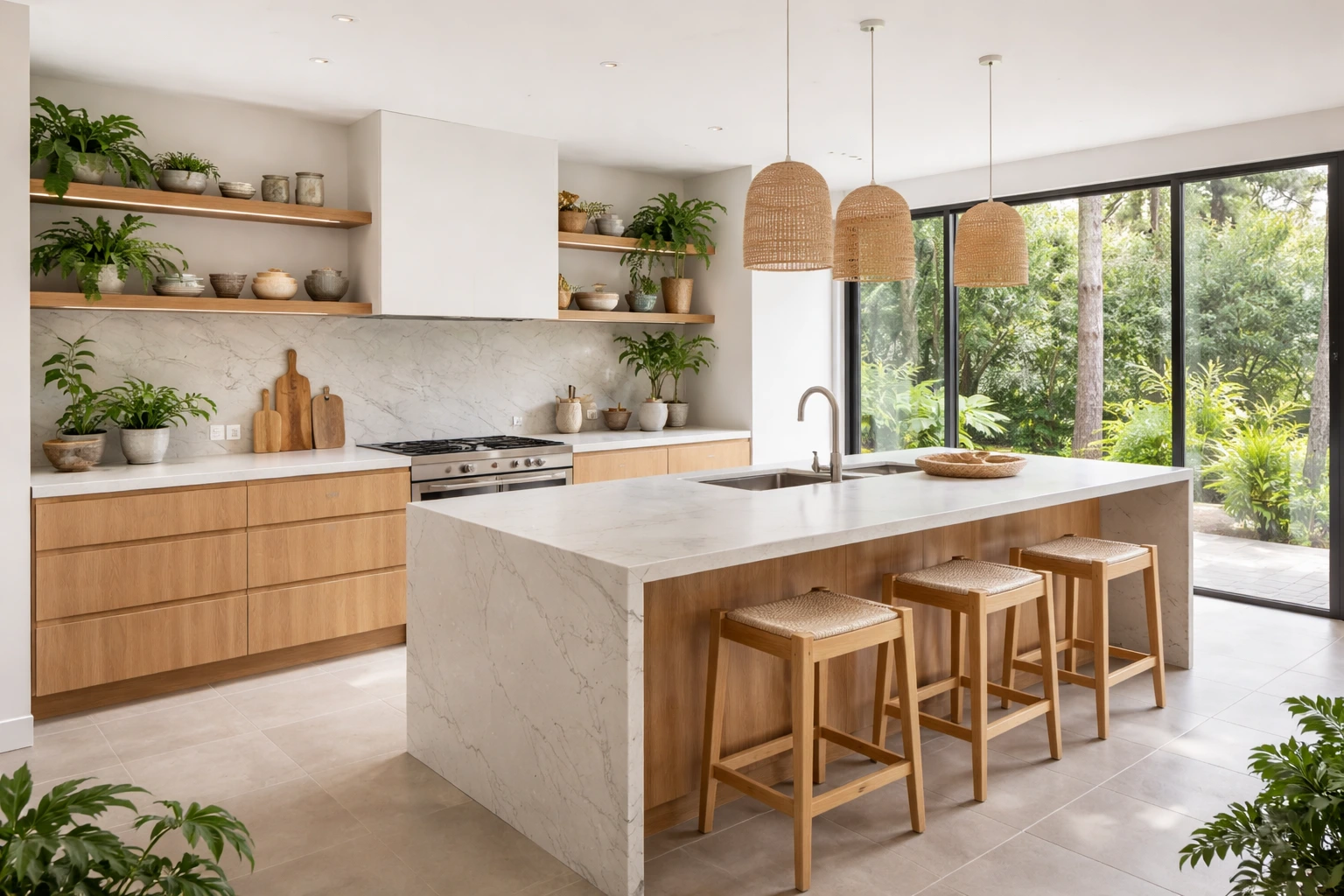
Biophilic kitchen design is gaining traction across Australia as homeowners look to create spaces that feel calm, connected, and functional. At its core, biophilic design is about incorporating natural elements into the built environment—enhancing everyday living through materials, light, textures, and spatial flow inspired by nature.
In kitchen design, this approach goes beyond aesthetics. It influences how a space feels and functions, supporting a more considered layout and material selection. For homeowners in Western Sydney and the Blue Mountains, where natural surroundings are often part of daily life, biophilic design provides a seamless way to reflect the outdoors inside the home.
For those exploring a kitchen renovation, understanding how to apply biophilic principles can help guide decisions around cabinetry, finishes, and layout—particularly when working with a custom joinery specialist such as A-Team Kitchens & Joinery, where all work is manufactured in-house using Australian-made materials.
Biophilic design is based on the concept that humans have an innate connection to nature. In residential design, this translates into spaces that incorporate natural light, organic materials, greenery, and textures that mimic the outdoors.
In kitchens, this may include:
Rather than following a single style, biophilic design can be adapted to suit modern, contemporary, or classic kitchens. The key is consistency—ensuring materials, colours, and layout work together to create a cohesive and calming environment.
Custom joinery plays a significant role in achieving this, as it allows for precise integration of natural materials and tailored storage solutions that support a clutter-free space.
Material selection is central to biophilic kitchen design. In Australia, there is a strong preference for durable, locally sourced materials that suit both climate and lifestyle.
Australian-made board products are commonly used in cabinetry due to their reliability and quality standards. These materials allow for a wide range of finishes, including:
Custom cabinetry manufactured in-house ensures consistency in finish and construction. It also allows for detailed design considerations, such as grain alignment, handle integration, and seamless joins—all of which contribute to a more natural look and feel.
For homeowners in areas like Penrith, Glenbrook, or Springwood, where bushland surroundings are part of the local landscape, timber-inspired finishes can help echo the external environment within the home.
Natural light is one of the most effective ways to enhance a biophilic kitchen. It not only improves visibility but also highlights textures and materials, making the space feel more open and inviting.
Key design considerations include:
In open-plan homes, kitchen layout plays a critical role in how light flows through the space. A well-designed layout can connect the kitchen to outdoor areas such as patios or gardens, strengthening the indoor-outdoor relationship.
Custom kitchen design allows for thoughtful placement of elements like islands, cabinetry, and appliances, ensuring that natural light is not obstructed. This is particularly relevant in Blue Mountains homes, where views and natural surroundings are often a defining feature.
Introducing plant life into the kitchen is a simple yet effective way to reinforce biophilic design. Whether it’s a small herb garden on the windowsill or integrated planter boxes within cabinetry, greenery adds colour, texture, and a sense of vitality.
Common approaches include:
In addition to plants, other organic elements can be incorporated, such as:
These details help soften the overall design and create a more balanced, natural environment.
Colour selection is another defining aspect of biophilic kitchen design. Rather than bold or high-contrast schemes, this approach leans towards muted, nature-inspired tones.
Popular palettes include:
These colours work well with Australian-made cabinetry materials and can be customised to suit the surrounding environment of the home. For example, homes in Leura or Wentworth Falls may favour cooler, misty tones, while properties in Penrith or Liverpool may lean towards warmer, sunlit palettes.
Consistency across cabinetry, benchtops, and splashbacks is important to maintain a cohesive look.
While biophilic design is often associated with aesthetics, it also supports practical kitchen use. A well-designed space that incorporates natural elements can contribute to:
Custom joinery allows for tailored storage solutions that align with these principles. Features such as pull-out pantries, concealed appliances, and integrated bins help maintain a clean and organised space—supporting the overall design intent.
Because all joinery is manufactured in-house, adjustments can be made to suit specific household needs, ensuring both form and function are addressed.
Biophilic kitchen design is particularly suited to homes in Western Sydney and the Blue Mountains due to the region’s strong connection to natural landscapes.
In areas such as Katoomba, Blackheath, and Medlow Bath, cooler climates and bushland surroundings often influence material and colour choices. Timber textures, darker tones, and layered lighting can help create a warm and grounded kitchen environment.
In contrast, suburbs like Emu Plains, Jamisontown, and Glenmore Park may favour lighter palettes and open layouts that maximise sunlight and airflow.
A locally experienced kitchen designer understands these nuances and can tailor the design accordingly—ensuring the final result complements both the home and its surroundings.
Achieving a cohesive biophilic kitchen requires more than selecting natural materials—it relies on precise execution. Custom joinery ensures that every element is designed to work together, from cabinetry proportions to finish selection.
In-house manufacturing provides greater control over:
This approach also supports the use of Australian-made products, aligning with industry standards and ensuring suitability for local conditions.
For homeowners, this means a more streamlined renovation process and a kitchen that reflects both design intent and practical needs.
Biophilic kitchen design offers a balanced approach to modern living—combining functionality with a strong connection to nature. Through thoughtful material selection, natural light integration, and custom joinery, kitchens can become spaces that feel both practical and calming.
For those considering a renovation, visiting a showroom can provide valuable insight into materials, finishes, and layout options. A-Team Kitchens & Joinery operates showrooms in Penrith and Blaxland, where homeowners can explore design possibilities and see examples of Australian-made cabinetry up close.
Visit the Penrith or Blaxland showroom to explore biophilic kitchen design options and discuss custom joinery solutions tailored to homes across Western Sydney and the Blue Mountains.
Butler’s Pantry vs Walk-In Pantry: Which Suits Your Lifestyle?
15/09/2026
What Is a Scullery, and Is It Worth Adding to Your Kitchen?
31/08/2026
The Most Requested Custom Joinery Features Among Sydney Homeowners
10/08/2026
Kitchen Islands vs Peninsulas: Which Works Better for Your Home?
27/07/2026
Should You Add a Kitchen Island? Pros, Cons and Space Requirements
13/07/2026
If you reside in the Blue Mountains, Penrith regions, or nearby areas, we're in the perfect position to bring your dream kitchen to life. Contact us and we'll be in touch to organise your free quote, design and consultation.